Atari: el hombre que se vengó comprando la empresa que casi le hundió
Atari: the man who got revenge by buying the company that nearly destroyed him
En el artículo del Commodore conté cómo Jack Tramiel construyó Commodore, la empresa que le dio a medio mundo su primer ordenador. Se me quedó fuera lo mejor: qué hizo después.
Porque en 1984, Tramiel se peleó con el presidente del consejo de Commodore y se marchó. Y en lugar de retirarse a un chalé, hizo lo que hace un general al que le quitan el mando: se compró al enemigo. Meses después apareció como dueño de Atari, la empresa contra la que había estado peleando a muerte durante los dos años anteriores.
Esta es la historia de esa venganza, de dos años de euforia y de un vertedero en Nuevo México donde están enterradas 700.000 cartuchos.
Primero, el pecado original: la guerra que mató a Atari
Para entender la jugada de Tramiel hay que entender el destrozo que había hecho. En julio de 1984, The New York Times publicó la noticia de la venta con una frase que hoy se lee como una lápida:
> "Warner Communications Inc., giving up its 18-month effort to rebuild a business that once flourished with Pac-Man video games and the boom in home computers, yesterday sold nearly all of its troubled Atari unit."[1]
El mismo artículo no tenía dudas de dónde venía el desastre:
> "It was Mr. Tramiel, the aggressive, cost-cutting former chief executive of Commodore International Ltd., who led the price-cutting war that buried Atari last year, many industry experts said."[1]
Es decir: el hombre que se disponía a comprar Atari era el que había hundido Atari. Los expertos del sector lo decían abiertamente en el diario más serio de Estados Unidos. Y no fue solo Atari: en el mismo texto se cuenta que otros tres grandes competidores (Texas Instruments, Mattel y Timex) habían salido del negocio desde octubre.[1]

El negocio era tan mala cosa que Warner no cobró un solo dólar en efectivo: recibió 240 millones en pagarés a largo plazo y garantías por un 32% de la nueva empresa de Tramiel.[1] Un analista de Paine Webber lo resumió mejor que nadie: "Warner essentially gave away the company, in hopes Tramiel could make something happen", Warner prácticamente regaló la empresa. Y de paso, Warner se quedó con las dos divisiones que sí valían algo y no entró en el paquete: las máquinas recreativas y Ataritel, la división de telecomunicaciones. El 20% de la empresa se quedó fuera.
Esa venta dejó un agujero de 425 millones de dólares en las cuentas de Warner ese trimestre.[1]
La máquina que lo había petado antes: el Atari 2600
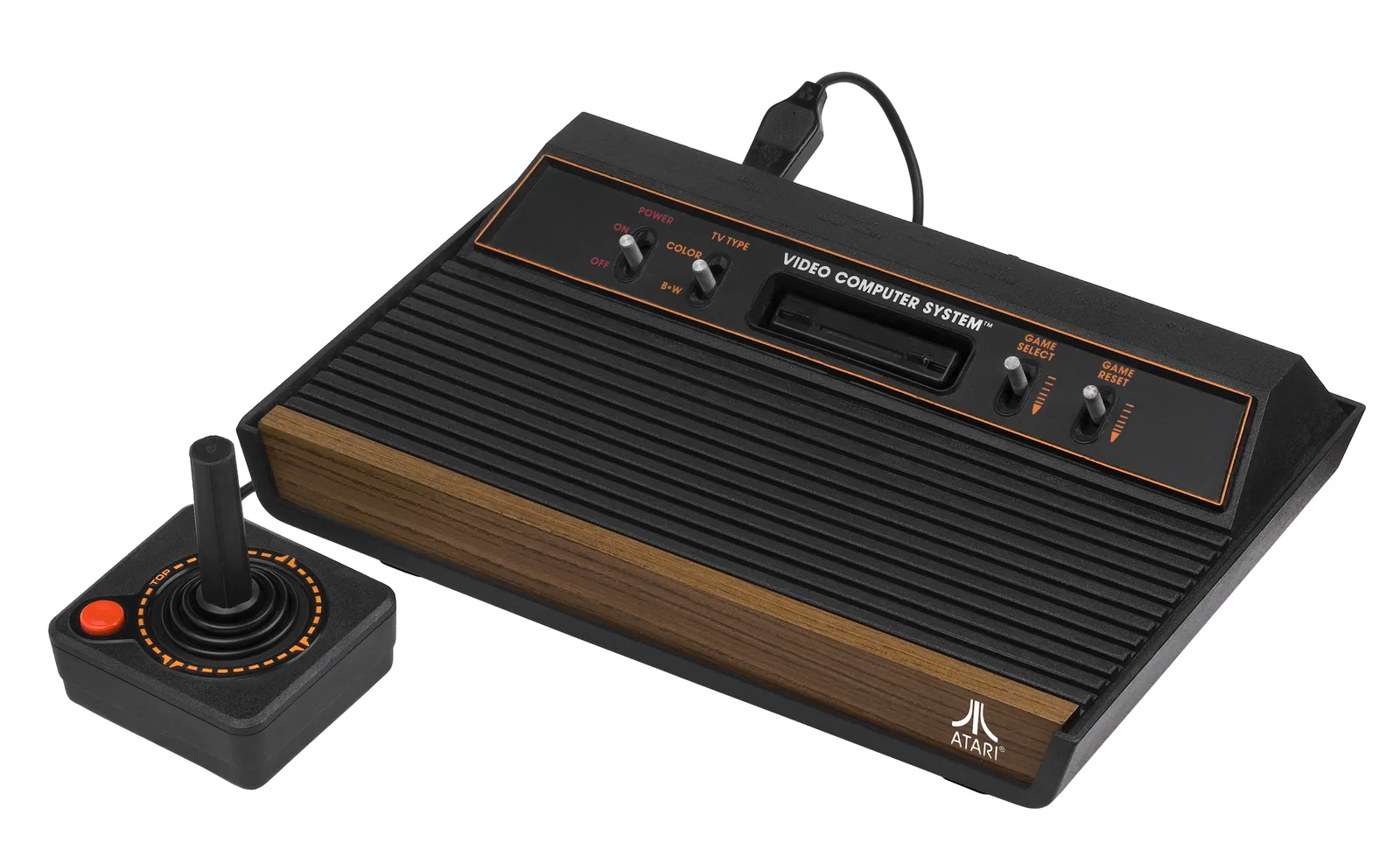
Ahora que sabemos cómo acabó, conviene recordar por qué Atari valía algo. Su consola estrella, el Atari 2600, vendió 30 millones de unidades.[3] Salió en 1977 por 189,95 dólares y estuvo en el mercado hasta 1992, quince años.[3]
Treinta millones de consolas en los ochenta, cuando en una casa había un televisor y ya. Fue la consola más popular del mundo hasta que llegó el desplome, y en el desastre del 83 se la llevó por delante con todo el mercado.[6]
Un detalle que a mí me hace gracia: dentro de esa consola que vendió 30 millones de unidades había un MOS 6507, un primo del 6502 de Commodore.[3] Es decir, Atari estaba vendiendo máquinas que llevaban dentro un chip de la casa del hombre que luego se la compró. El mundo del hardware en los ochenta era un pueblo.
Entonces llegaron las excavadoras
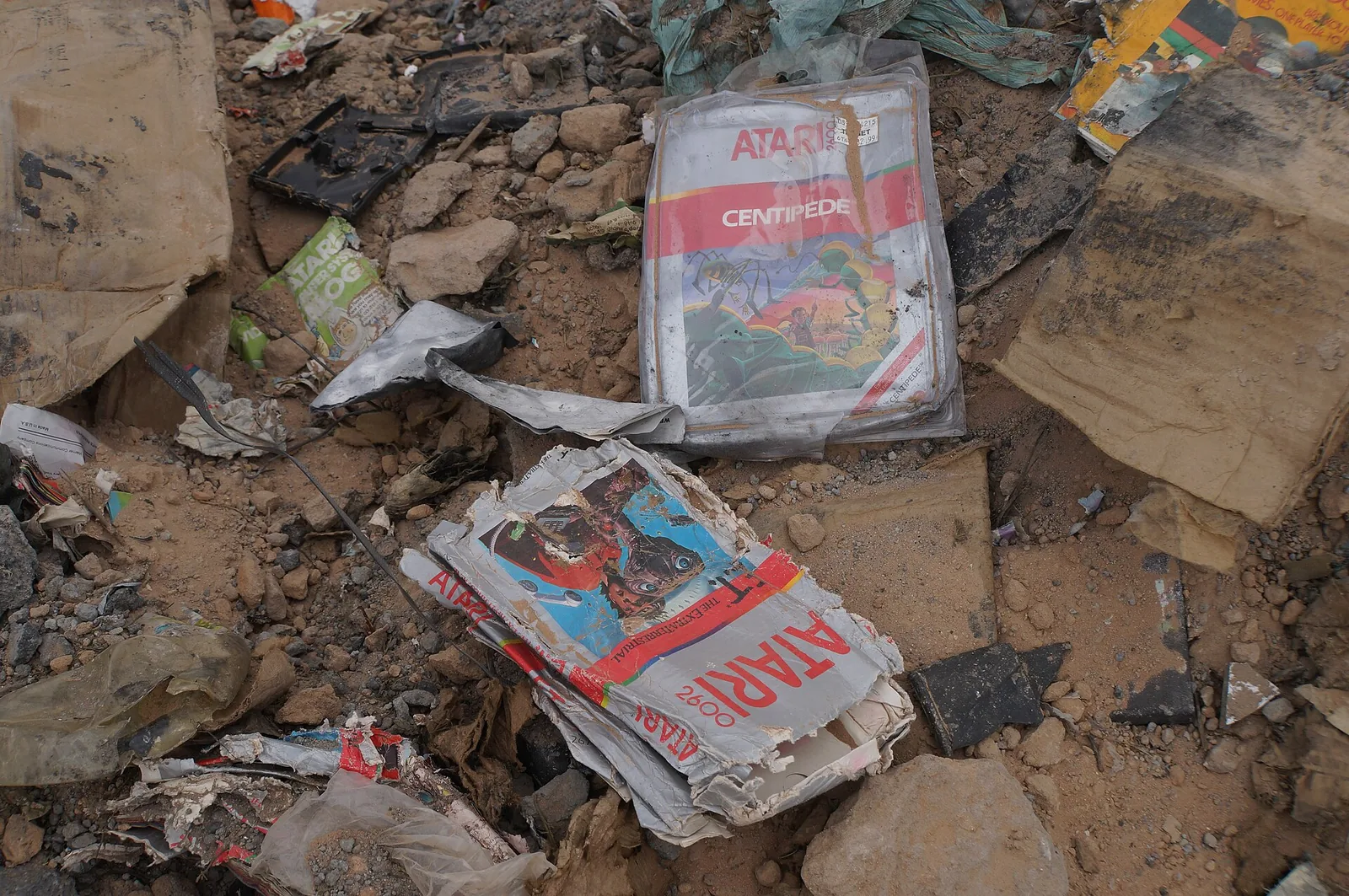
Casi todo el mundo ha oído la leyenda: que Atari, hundida por el fracaso de su juego de E.T., metió millones de cartuchos en camiones y los enterró en un vertedero. Durante treinta años se contó como leyenda urbana.
Resultó ser verdad, y ahora sabemos cuánto.
Los datos verificados: en 1983, Atari enterró en un vertedero de Alamogordo, Nuevo México, cartuchos, consolas y ordenadores sin vender.[4] Durante décadas se dudó de la historia y se despachaba como mito, pero los responsables de Atari acabaron confirmando la cifra: unos 700.000 cartuchos de varios juegos, incluido E.T. No eran "millones", como se decía, pero seguían siendo setecientos mil juguetes en un agujero.
Y aquí viene la parte que de verdad parece una novela: en 2014, la empresa Fuel Industries, Microsoft y otros, en colaboración con el gobierno de Nuevo México, excavaron el sitio para rodar un documental, Atari: Game Over. El 26 de abril de 2014 la excavación encontró juegos y hardware tirados. De todo lo enterrado, solo recuperaron una fracción (unos 1.300 cartuchos) y una parte se cedió para su conservación.[4]
De leyenda urbana a yacimiento arqueológico. Hubo que sacar permiso del gobierno para desenterrar el fracaso de una empresa.
La venganza, en un año
Con Atari en las manos, Tramiel hizo exactamente lo que sabía hacer: mover rápido y barato. Fundó Atari Corporation el 17 de mayo de 1984.[2]
Y en junio de 1985 (un año después, no cinco) ya tenía en la calle el Atari ST, un ordenador que salió por 799,99 dólares en versión monocromo y 999,99 con monitor en color.[5] Vendió más de tres millones de unidades solo en Europa.[5]
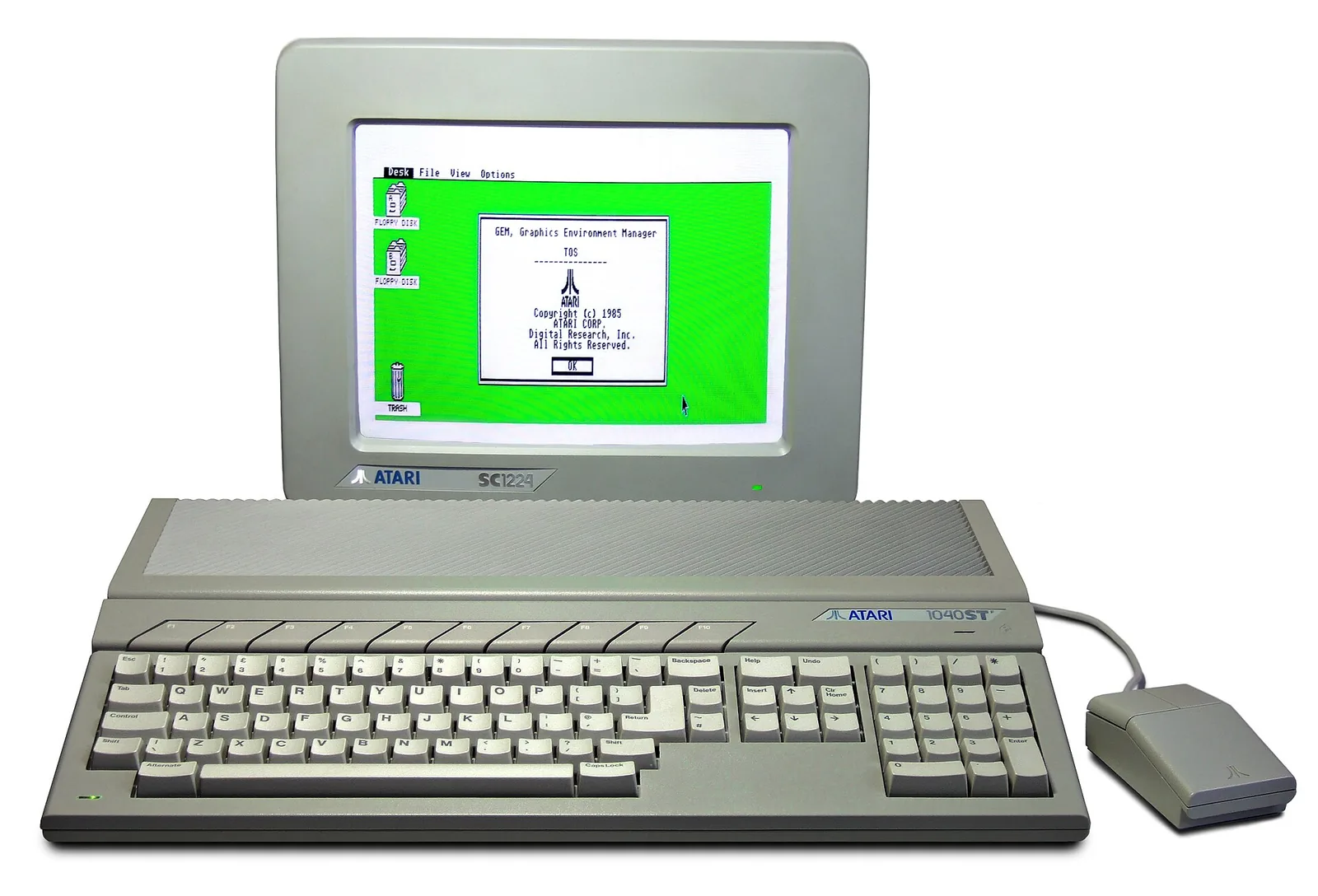
Y ahora el dato que a él le habría gustado leer: fue el primer ordenador personal con interfaz gráfica en color por mapa de bits, ratón, ventanas y colores, en un año en que eso era una novedad absoluta.[5] Y el Los Angeles Times lo tituló así, en enero de 1985: "Tramiel confronta a los escépticos con una nueva línea", presentando un ordenador "con un precio muy por debajo de su competidor más cercano, el Macintosh de Apple".[7] El diario lo contaba con la mezcla exacta de admiración y duda: en la feria, los ejecutivos del sector estaban "impresionados por el diseño y el precio agresivo" de la nueva familia ST, y a la vez inquietos porque Tramiel hubiera sacado un sistema incompatible con los que ya existían.
O sea: le habían quitado Commodore, y en doce meses había construido un competidor con mejor interfaz gráfica, más barato, y lo vendió a millones de europeos. Como venganza, es de manual.
Y luego, el mismo final de siempre
Aquí es donde la historia deja de ser divertida, porque Tramiel repitió el patrón: la máquina era buena, pero la empresa no cambió cuando el mercado cambió.
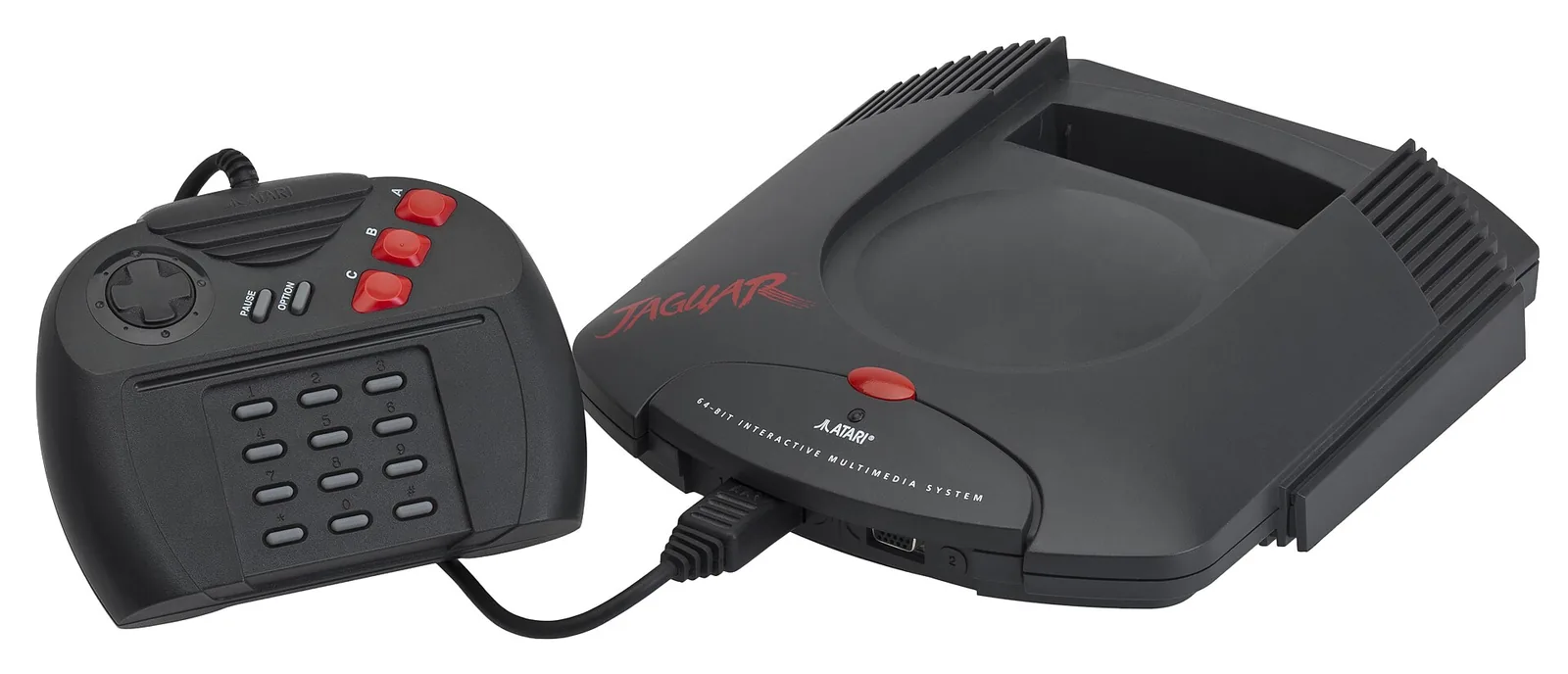
El Atari ST aguantó hasta 1993. La última apuesta fue la consola Jaguar, y salió mal. La marca ha ido pasando de mano en mano desde entonces, sin que nadie repitiera el éxito de los primeros años.[2]
Yo creo que ahí está lo interesante de esta historia, y no en el chiste del vertedero. Tramiel era un genio fabricando barato y vendiendo a las masas, y las dos veces que le dieron una empresa, la llevó al mismo sitio: a dominar un mercado durante unos años y a desaparecer cuando el mercado giró. Con Commodore perdió él. Con Atari, perdió después.
El mismo hombre, el mismo patrón, dos empresas distintas. Eso no es mala suerte: es una manera de trabajar.
Lo que me llevo
Cuando era crío jugaba con un Commodore 64 y un Amiga 500 sin saber nada de las guerras entre las empresas que los fabricaban. Ahora, mirando atrás, veo que estaba jugando en el campo de batalla de un señor polaco que había sobrevivido a Auschwitz, que se compró a su proveedor de chips para no depender de nadie, que hundió a su principal rival con una guerra de precios y que, cuando lo echaron de su propia empresa, compró a ese rival con el dinero del despido.
Antes miraba los ordenadores de los ochenta como quien mira una vitrina: por los chips y por los juegos. Ahora los miro por lo que costaron y por quién decidió ese precio. Es una mirada menos romántica y creo que es la que se acerca más a la verdad: cuando conté la historia del Spectrum pasó lo mismo, lo que contaba no era la máquina, sino que 125 libras pusieran un ordenador en media Gran Bretaña.
Se puede discutir si era un buen jefe. Lo que no se puede discutir es que la informática de los ochenta no se entiende sin él.
Referencias
1. Warner sells Atari to Tramiel - The New York Times (3 jul 1984)
2. Atari Corporation - Wikipedia (en)
3. Atari 2600 - Wikipedia (en)
4. Atari video game burial - Wikipedia (en)
6. Video game crash of 1983 - Wikipedia (en)
Créditos de las imágenes
Las fotografías de este artículo provienen de Wikimedia Commons y se reproducen bajo sus licencias:
- Jack Tramiel, Alex Handy, CC BY-SA 2.0
- Atari 2600, Evan-Amos, dominio público
- Juegos del vertedero de Alamogordo, taylorhatmaker, CC BY 2.0
- Atari 1040ST, Bill Bertram, CC BY-SA 2.5
- Atari Jaguar, Evan-Amos, CC BY-SA 3.0
In the Commodore article I told the story of how Jack Tramiel built Commodore, the company that gave half the world its first computer. I left out the best part: what he did next.
Because in 1984 Tramiel fell out with the chairman of Commodore and walked away. And instead of retiring to a country house, he did what a general who has been relieved of command does: he bought the enemy. Months later he turned up as the owner of Atari, the company he had been fighting to the death for the previous two years.
This is the story of that revenge, of two years of euphoria, and of a landfill in New Mexico where 700,000 cartridges are buried.
First, the original sin: the war that killed Atari
To understand Tramiel's move you have to understand the wreckage he had left behind. In July 1984 The New York Times published the news of the sale with a sentence that today reads like an epitaph:
> "Warner Communications Inc., giving up its 18-month effort to rebuild a business that once flourished with Pac-Man video games and the boom in home computers, yesterday sold nearly all of its troubled Atari unit."[1]
The same article had no doubt about where the disaster came from:
> "It was Mr. Tramiel, the aggressive, cost-cutting former chief executive of Commodore International Ltd., who led the price-cutting war that buried Atari last year, many industry experts said."[1]
In other words: the man who was about to buy Atari was the one who had sunk Atari. Industry experts were saying so openly in the most serious newspaper in the United States. And it was not only Atari: the same piece reports that three other major competitors (Texas Instruments, Mattel and Timex) had left the business since October.[1]
The business was so bad that Warner did not collect a single dollar in cash: it received 240 million in long-term notes plus guarantees over 32% of Tramiel's new company.[1] A Paine Webber analyst summed it up better than anyone: "Warner essentially gave away the company, in hopes Tramiel could make something happen". And along the way Warner kept the two divisions that were actually worth something and were not in the package: the arcade business and Ataritel, the telecommunications arm. 20% of the company was left out.
That sale left a hole of 425 million dollars in Warner's accounts that quarter.[1]
The machine that had already blown it: the Atari 2600
Now that we know how it ended, it is worth remembering why Atari was worth anything. Its flagship console, the Atari 2600, sold 30 million units.[3] It launched in 1977 at 189.95 dollars and stayed on the market until 1992, fifteen years.[3]
Thirty million consoles in the eighties, back when a house had one television and that was it. It was the most popular console in the world until the crash arrived, and the disaster of '83 took it down along with the whole market.[6]
One detail that makes me smile: inside that console which sold 30 million units there was a MOS 6507, a cousin of Commodore's 6502.[3] In other words, Atari was selling machines that carried a chip from the house of the man who would later buy them. The hardware world of the eighties was a village.
Then the diggers arrived
Almost everyone has heard the legend: that Atari, sunk by the failure of its E.T. game, loaded millions of cartridges into trucks and buried them in a landfill. For thirty years it was told as an urban legend.
It turned out to be true, and now we know how many.
The verified figures: in 1983 Atari buried cartridges, consoles and unsold computers in a landfill in Alamogordo, New Mexico.[4] For decades the story was doubted and dismissed as a myth, but Atari's people eventually confirmed the number: about 700,000 cartridges from several games, E.T. included. They were not "millions", as people said, but it was still seven hundred thousand toys in a hole.
And here is the part that really reads like a novel: in 2014 Fuel Industries, Microsoft and others, together with the government of New Mexico, excavated the site to shoot a documentary, Atari: Game Over. On 26 April 2014 the dig turned up discarded games and hardware. Of everything that had been buried they recovered only a fraction (about 1,300 cartridges), and part of it was set aside for preservation.[4]
From urban legend to archaeological site. You needed a government permit to dig up a company's failure.
The revenge, in one year
With Atari in his hands, Tramiel did exactly what he knew how to do: move fast and cheap. He founded Atari Corporation on 17 May 1984.[2]
And in June 1985 (one year later, not five) he already had the Atari ST on the street, a computer that launched at 799.99 dollars in monochrome and 999.99 with a colour monitor.[5] It sold more than three million units in Europe alone.[5]
And now the fact he would have liked to read: it was the first personal computer with a colour bitmap graphical interface, mouse, windows and colours, in a year when that was an absolute novelty.[5] The Los Angeles Times headlined it like this, in January 1985: "Tramiel Confronts Skeptics With a New Line", presenting a computer "priced well below its closest competitor, Apple's Macintosh".[7] The paper told it with the exact mix of admiration and doubt: at the trade show, industry executives were "impressed by the design and aggressive price" of the new ST family, and at the same time uneasy that Tramiel had launched a system incompatible with the ones already on the market.
So: they had taken Commodore away from him, and within twelve months he had built a competitor with a better graphical interface, cheaper, and sold it to millions of Europeans. As a revenge, it is straight out of the manual.
And then, the same ending as always
This is where the story stops being fun, because Tramiel repeated the pattern: the machine was good, but the company did not change when the market did.
The Atari ST held on until 1993. The last gamble was the Jaguar console, and it went wrong. The brand has passed from hand to hand ever since, with nobody repeating the success of the early years.[2]
I think that is where the interesting part of this story lies, not in the landfill joke. Tramiel was a genius at building cheap and selling to the masses, and both times he was handed a company he took it to the same place: dominating a market for a few years, then disappearing when the market turned. With Commodore he lost. With Atari, he lost later.
The same man, the same pattern, two different companies. That is not bad luck: it is a way of working.
What I take away from this
When I was a kid I played on a Commodore 64 and an Amiga 500 knowing nothing about the wars between the companies that made them. Now, looking back, I see that I was playing on the battlefield of a Polish man who survived Auschwitz, who bought his chip supplier so as not to depend on anyone, who sank his main rival with a price war, and who, when he was thrown out of his own company, bought that rival with the severance money.
I used to look at eighties computers the way you look at a display case: for the chips and the games. Now I look at what they cost and who set that price. It is a less romantic way of looking at them, and I think it is the one that comes closest to the truth: when I told the story of the Spectrum the same thing happened, what mattered was not the machine but the fact that 125 pounds put a computer in half of Great Britain.
You can argue about whether he was a good boss. What you cannot argue is that eighties computing makes no sense without him.
References
1. Warner sells Atari to Tramiel - The New York Times (3 Jul 1984)
2. Atari Corporation - Wikipedia
4. Atari video game burial - Wikipedia
6. Video game crash of 1983 - Wikipedia
Image credits
The photographs in this article come from Wikimedia Commons and are reproduced under their licences:
- Jack Tramiel, Alex Handy, CC BY-SA 2.0
- Atari 2600, Evan-Amos, public domain
- Atari games from the Alamogordo landfill, taylorhatmaker, CC BY 2.0
- Atari 1040ST, Bill Bertram, CC BY-SA 2.5
- Atari Jaguar, Evan-Amos, CC BY-SA 3.0
$ tail -f comentarios
Cargando comentarios…